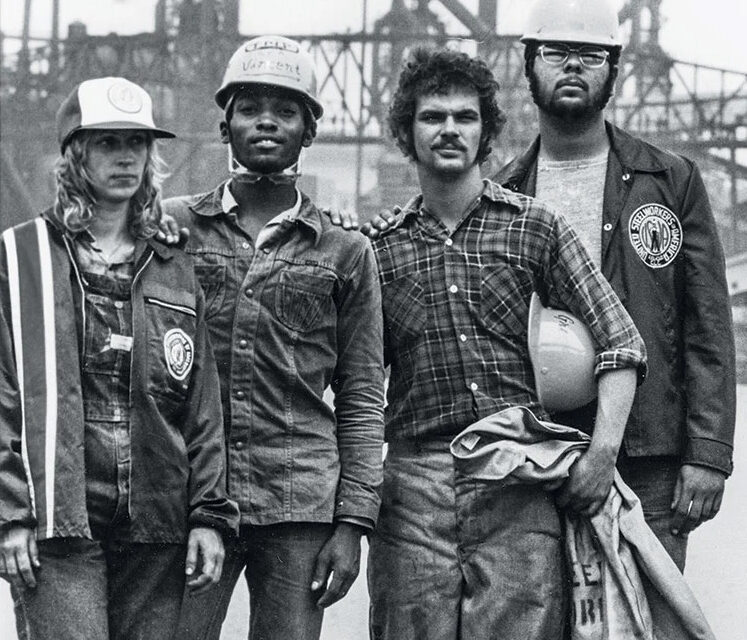
American workers stand on the precipice of an uncertain future. Behind them lies a century of U.S. global dominance. Marxists argue that imperialist expansion, buttressed by the world’s most powerful economy, produced this primacy, while capital garnered enormous profits from both foreign and domestic labor. For decades, especially in the mid-20th century, much of the American working class shared in these gains—through rising living standards, union growth, expanded social benefits, and advances in racial and gender equality.
Today, however, after decades of gradual economic decline, U.S. economic, political, and military hegemony is foundering. As a result, the working class faces increasing deprivation, fragmentation, and loss of power.
Can renewed union organizing rebuild working-class strength? Will a revolutionary political party, class struggle politics, or mass mobilization drive a resurgence of workers in the core imperial power? What forces could reverse the ongoing deterioration of the American working class amidst America’s hegemonic eclipse?
Peter Fay is a Marxist public historian. At 23, as a machinist and open Communist, he won a seat on the executive board of a 1,100-member Steelworkers local, overcoming company red-baiting. He also organized for UE and District 1199 and managed electoral campaigns and an NAACP desegregation suit. Years later, he became a software engineer and public historian, focusing on New England slavery and early labor movements. Today, he publishes on labor and Black history, teaches Marx’s Capital, and serves on boards of several historical societies in Rhode Island.