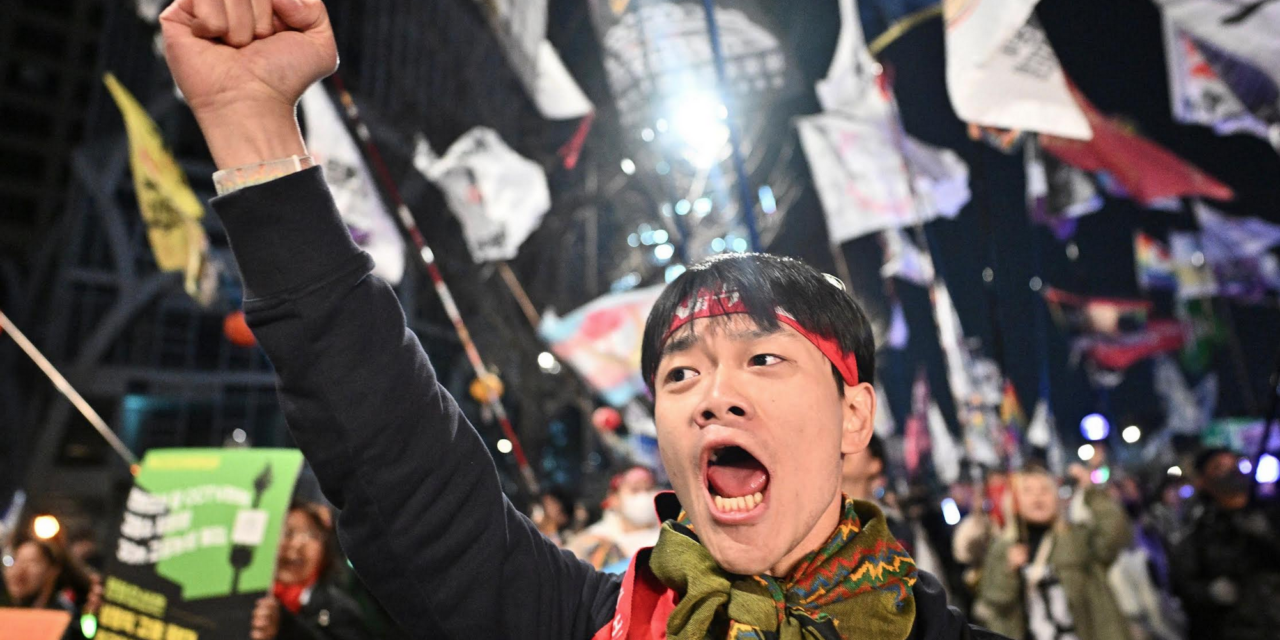
From its war of aggression against Iran to a potential conflict with China, this talk argues that Washington is seeking to use South Korea’s enormous military capacity as a proxy force for U.S. imperialism across Asia. At the center of this relationship is the decades-long wartime operational control (OPCON) that Washington continues to wield over Seoul. By keeping the South Korean military within a U.S.-controlled wartime command structure, OPCON provides the institutional framework through which Korea’s roughly 500,000 active-duty troops and more than 3 million reservists can be integrated into U.S. wartime operations. This talk examines how this military command structure enables South Korea to be drawn into conflicts beyond the Korean Peninsula, from the war around Hormuz to a potential confrontation with China. It also examines the contradiction between Trump’s recent diplomatic gambit toward North Korea and the continuation of U.S.-led trilateral war-making infrastructure linking South Korea and Japan, while highlighting growing South Korean resistance to U.S. militarism.
Dr. S. Chun is a researcher and activist focusing on inter-Korean relations and U.S. foreign policy in the Korean Peninsula.